Turn AI opportunities into governed workflows, not theatre.
Use-case selection, proof-of-concept delivery, integration, governance and team rollout for organisations adopting AI in their existing operations.
AI implementation services help a business move from curiosity or pilots to measurable use cases. Seditio identifies where AI can improve a workflow, builds the first working version, integrates it with real systems and adds evaluation, monitoring and human approval.
Who this is for.
For leadership and operations teams adopting AI across an existing organisation: you know AI should change how work gets done, but need help choosing the use cases, proving value, setting governance and bringing teams along. If you are building an AI product to sell, AI development services is the closer fit.
AI implementation is an adoption problem as much as an engineering one. The questions that decide success are which workflows to change first, what data the AI may see, who approves its outputs, how the result will be measured and how teams will learn the new way of working. Seditio answers those questions with you before any build, then builds the first working version.
Use cases are chosen on value and risk, not novelty. We look for repeated work where people spend time searching, reading, drafting or deciding, estimate the time and quality gain, check the data and system access it needs, and rank the candidates against effort and risk. The result is a short list with a business case for each, not a catalogue of possibilities.
The first use case is delivered as a working proof of concept on real data and connected to the systems people already use, with evaluation, monitoring and human approval in place. When it meets the agreed measures, it moves into production with a rollout plan and training for the teams who will use it.
Seditio's AI work spans products and training. Biologit applies AI to pharmacovigilance signal detection, and SectorSift and Clear Talent, founder-owned ventures built by Seditio, use AI agents and an assistant with human approval. Antonie Geerts has trained executives through AI for Business programmes since 2023 (see his profile), and he gave a 2024 keynote for Mercedes-Benz Shared Services.
How this differs from similar services
- AI Development Services →
Choose AI development services when the goal is engineering an AI product, or an AI feature in software you sell.
- Custom AI Development →
Choose custom AI development when the use case is already chosen and you need a bespoke AI application built for it.
- AI Automation Services →
Choose AI automation services when the target is one operational process with high manual effort.
Outcomes shaped around the business.
Prioritised AI use cases with business value
A working proof of concept or production workflow
Clear data, security and approval boundaries
A practical rollout path for teams
Step 1 · AI readiness assessment
Do not begin with a model catalogue. Identify a repeated task where users spend time interpreting, searching, drafting or deciding, then define what a better outcome looks like.
View as list
- Step 1
- AI readiness assessment
- → Use-case and process design: Is there a decision or task worth improving, with the data to support it? (through gate)
- Step 2
- Use-case and process design
- → Proof-of-concept development: Can success be measured before anything is built? (through gate)
- Step 3
- Proof-of-concept development
- → System and data integration: Does it pass evaluation on real examples? (through gate)
- Step 4
- System and data integration
- → Evaluation, governance and training plan: Who approves, monitors and owns it in production? (through gate)
- Step 5
- Evaluation, governance and training plan
Step
- Step 1 · AI readiness assessment
Do not begin with a model catalogue. Identify a repeated task where users spend time interpreting, searching, drafting or deciding, then define what a better outcome looks like.
- Step 2 · Use-case and process design
Gate 1 → 2 Is there a decision or task worth improving, with the data to support it?
Decide which outputs can be shown, which can be saved as drafts and which actions require explicit approval.
- Step 3 · Proof-of-concept development
Gate 2 → 3 Can success be measured before anything is built?
Build an evaluation set from real tasks before launch and track quality by use case rather than one generic accuracy number.
- Step 4 · System and data integration
Gate 3 → 4 Does it pass evaluation on real examples?
Place model calls behind a service layer that controls identity, data access, prompts, output schemas, cost and logging.
- Step 5 · Evaluation, governance and training plan
Gate 4 → 5 Who approves, monitors and owns it in production?
Regression tests should run when models, prompts, retrieval logic or source data change.
- AI Development ServicesApplied AI
- Agentic AI DevelopmentAgentic systems
- AI Agent DevelopmentAutonomous workflows
- LLM Application DevelopmentLanguage-model products
- Generative AI IntegrationAI integration
- AI Chatbot DevelopmentConversational interfaces
- AI Implementation ServicesAI adoption
- Custom AI DevelopmentAI software engineering
- AI Automation ServicesWorkflow automation
- Business Process Automation ServicesWorkflow automation
A complete path, with clear boundaries.
Every engagement is scoped around the product and risk. These are the building blocks we commonly assemble.
See Fig. 07 ↑- AI readiness assessment
- Use-case and process design
- Proof-of-concept development
- System and data integration
- Evaluation, governance and training plan
How an engagement runs.
- AI readiness assessment Workflows, data, systems, security constraints and team skills are reviewed to find where AI can help and what would block it.
- Use-case selection Candidates are ranked by value, feasibility and risk, and each shortlisted use case gets a measurable definition of success.
- Proof of concept The first use case is built on representative data and evaluated against the agreed measures, including the cost of each completed task.
- Integration and governance The working version is connected to real systems with access controls, approval steps, logging and monitoring.
- Rollout and training Teams are trained on the new workflow, adoption and quality are tracked, and the next use case is planned from what was learned.
Seditio's AI evidence includes Biologit, SectorSift, Clear Talent and Antonie Geerts' enterprise AI training and keynote work.
Chosen to fit the workload—not the pitch deck.
- Python
- APIs
- Google Cloud
- OpenAI
- Anthropic
- Gemini
- RAG
- Vector search
Relevant work and capabilities.
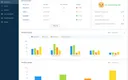
Planning AI implementation services.
Where should a company start with AI implementation?
With a repeated task that matters, not with a model catalogue. Pick a workflow where people spend time searching, reading, drafting or deciding, define what a better outcome looks like, and check that the data it needs is available and permitted. One working use case teaches more than a strategy deck.
How do you measure the return on an AI implementation?
Against a baseline of the current process: time per task, quality or error rate, throughput and exceptions. The proof of concept is measured on the same terms, with running costs included, so the decision to scale rests on numbers from your own work.
What governance does an AI rollout need?
Clear rules on which data AI may use, which outputs can be shown or saved as drafts, which actions need human approval, how decisions are logged and who owns the system. These are set before launch and reviewed as use grows.
Do you train our teams to use AI?
Yes. Training is part of the rollout plan for each use case and covers both the specific workflow and how to judge AI output.
Can AI work with our existing systems and data?
Usually, yes. Most implementations connect to existing systems through APIs and retrieve from approved sources rather than replacing anything. Access follows each user's existing permissions, and sensitive data can be kept out of model calls.
Need a practical view of AI implementation services?
Share the context, constraints and current state. We will help define the most useful next decision.